← All books
Dark historical fantasy
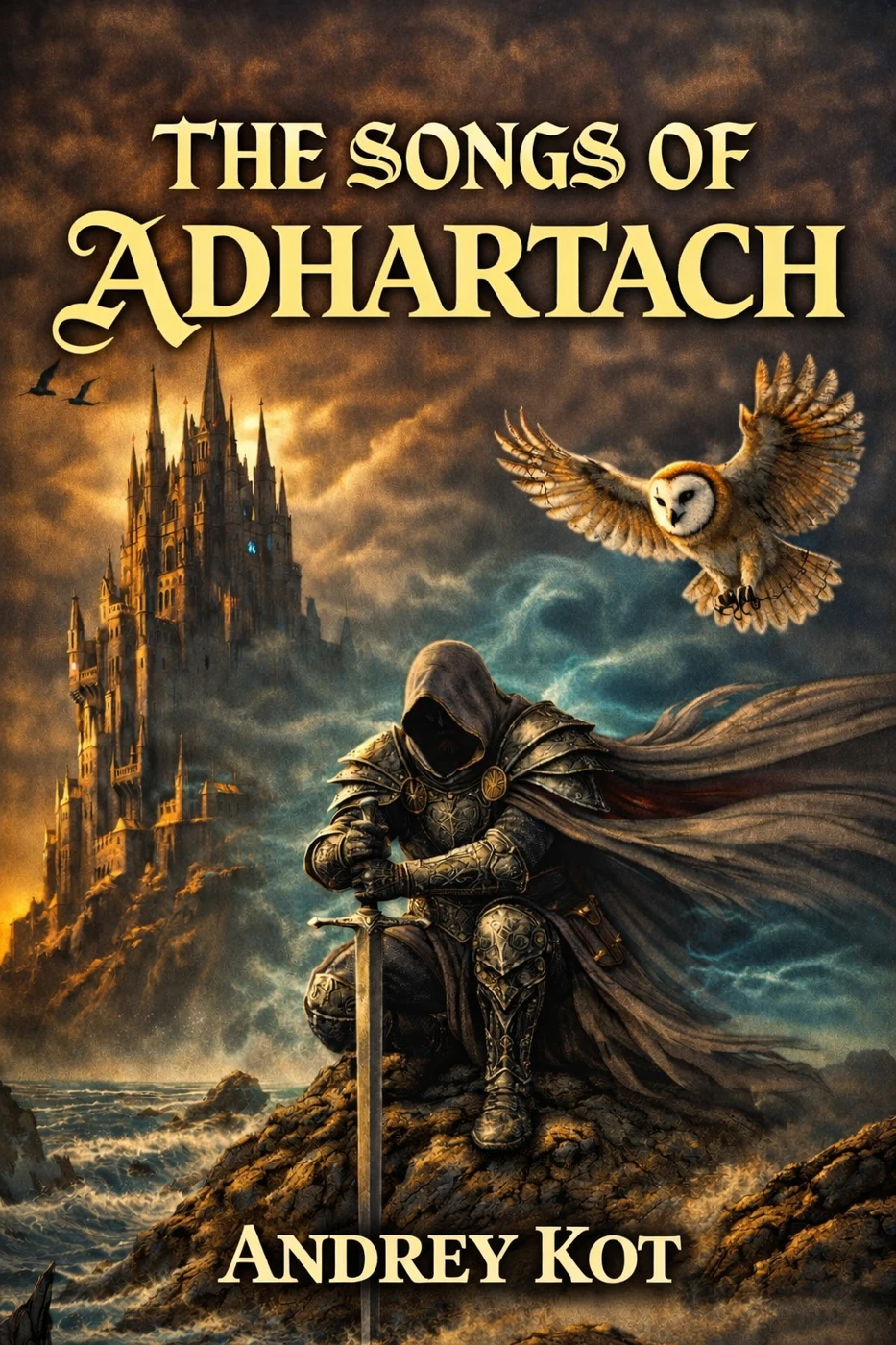
The Songs of Adhartach
NORMANDY, 1256. A BOY'S MUTILATED BODY IS FOUND IN THE WOODS NEAR A BENEDICTINE ABBEY.
When Amaury de la Roche, commander of the Knights Templar, returns to his family's seat, his sister has already brought a blood-soaked stranger back from the forest. Melanie d'Eville calls herself the victim of a terrible crime. The Inquisition calls her a witch. Amaury must decide who to believe before the fire is lit.
A sardonic friar leads him to a prophecy that reaches far beyond anything a Norman knight was meant to know. His path binds him to people he should never have met: a shaman from the Mongolian steppe and a young woman out of Novgorod. Their languages, their gods and their ideas of the world could hardly differ more. And still, an old story seems to tie their fates together.
What begins as a fight for family and survival becomes a journey through a medieval world where Christian faith collides with older traditions, power with superstition, and every miracle might also be a deception.
A curse gnaws at the house of de la Roche. And the song that lies over all of it is far from finished.
For readers of Umberto Eco's The Name of the Rose and Katherine Arden's The Bear and the Nightingale.
An excerpt from the novel was longlisted for the Etnopero 2025 Literary Award.
The sample opens in Amazon’s reader.
An ancient voice
The prophecy
Four destinies, named long before their paths converge.
Shaman, Seeress, Sword-brother, Sorceress—four;
Two rise at sunrise, two from sunset’s shore.A twin Sword-brother, vowed to blade and creed,
Named as the Rock—in faith and faithful deed.A Shaman, silver-haired yet young in stride,
Bear-hearted, sky-eyed, lord of the steppe-horse ride.In forest deeps the northern Seeress threads,
Sure with the bow, as cunning as a marten treads.Their woven paths, by hidden will, align
To save the sorceress—named a witch—when comes the time.
An excerpt from The Songs of Adhartach
Inside the novel
Every place holds a story
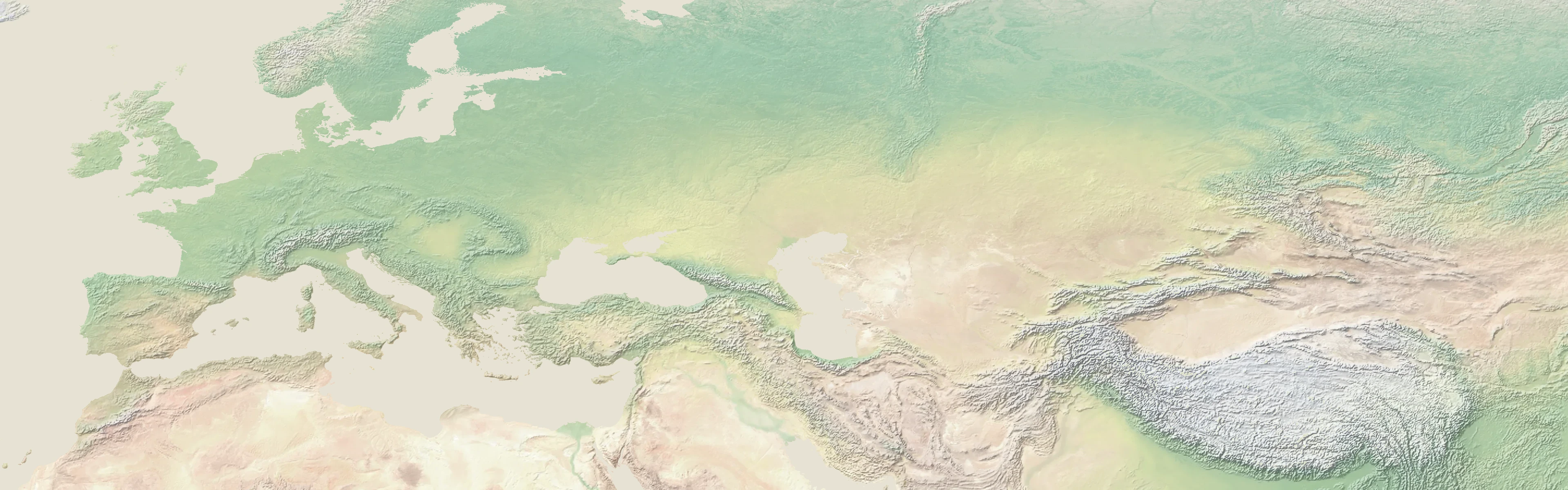
From the Norman cliffs to the khan’s court. Choose a place on the map to discover what brings the characters there.
Europe & the Mediterranean
Where shall we go?
Map and image credits
Map imagery: Natural Earth II. Chartres · J.-B.-A. Lassus · Public domain. Mont-Saint-Michel · Cornell University Library · CC BY 2.0.
Scenes and places · read without the map
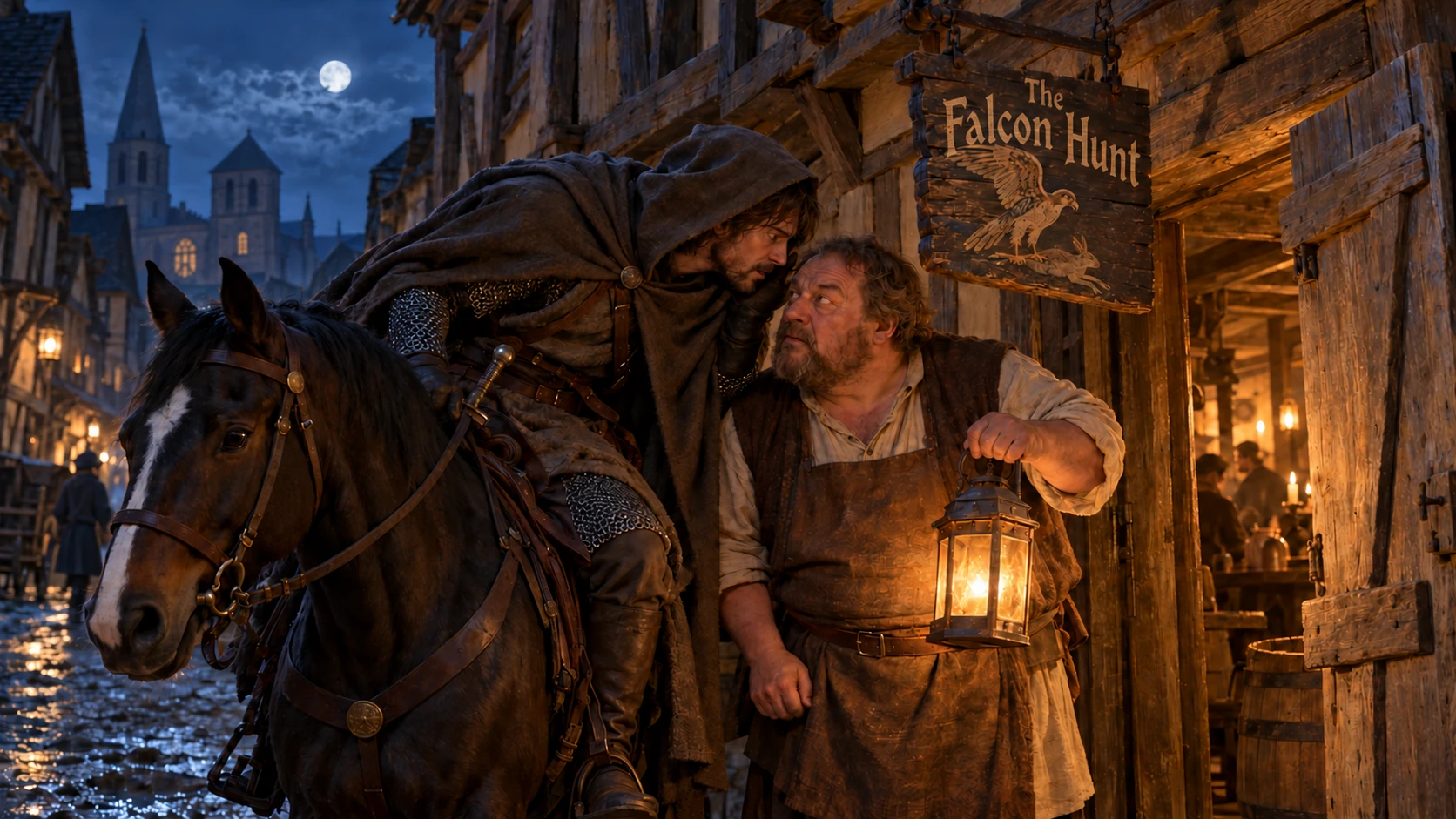
Chartres · A password in the night
The characters’ journeys · 13th century
Level with the sign “The Falcon Hunt,” the man sprang from his horse and, with heavy blows of a gauntleted fist, roused all the inhabitants of the inn in the dead of night.
The host, a small, stocky man in a nightcap, with a torch in one hand and a kitchen knife—a clear close relative of a good sword—in the other, burst out at the noise, accompanied by four servants armed with the full arsenal of kitchenware.
The cause of the commotion heard scuffling behind the heavy wrought gates and shouted:
“Master Robien, open up. The Hound and the Torch, my good fellow.”
A small wicket in the gate opened, and a strip of torchlight lit the guest.
At once the gates swung open with a creak. Bowing frequently, the host and his household let the rider into the yard. A servant boy took the horse, wet from the run, and Master Robien led the night guest inside.
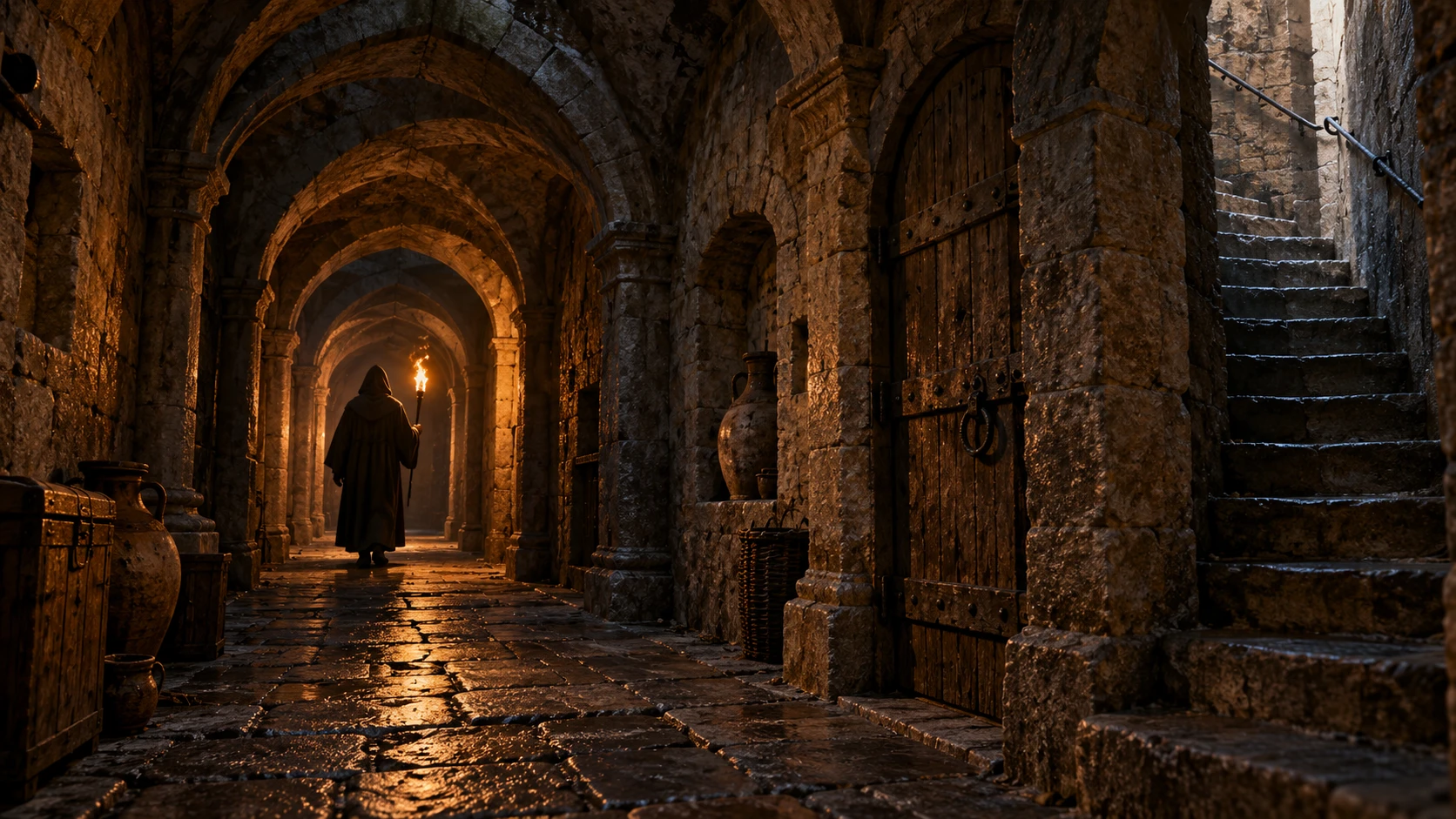
Paris · Beneath Saint-Jacques
The characters’ journeys · 13th century
All at once the broad passage ended, and Lucy walked straight into her companion’s back. A monastic service sounded so clear above them there could be no doubt: they were under the church, and ahead rose a gray stone wall.
“A dead end,” Amaury said, wrong-footed.
“What? Impossible! Did we miss a door in our hurry?” Lucy peppered him.
“I can’t make sense of it,” he muttered, baffled, and began feeling along the masonry.
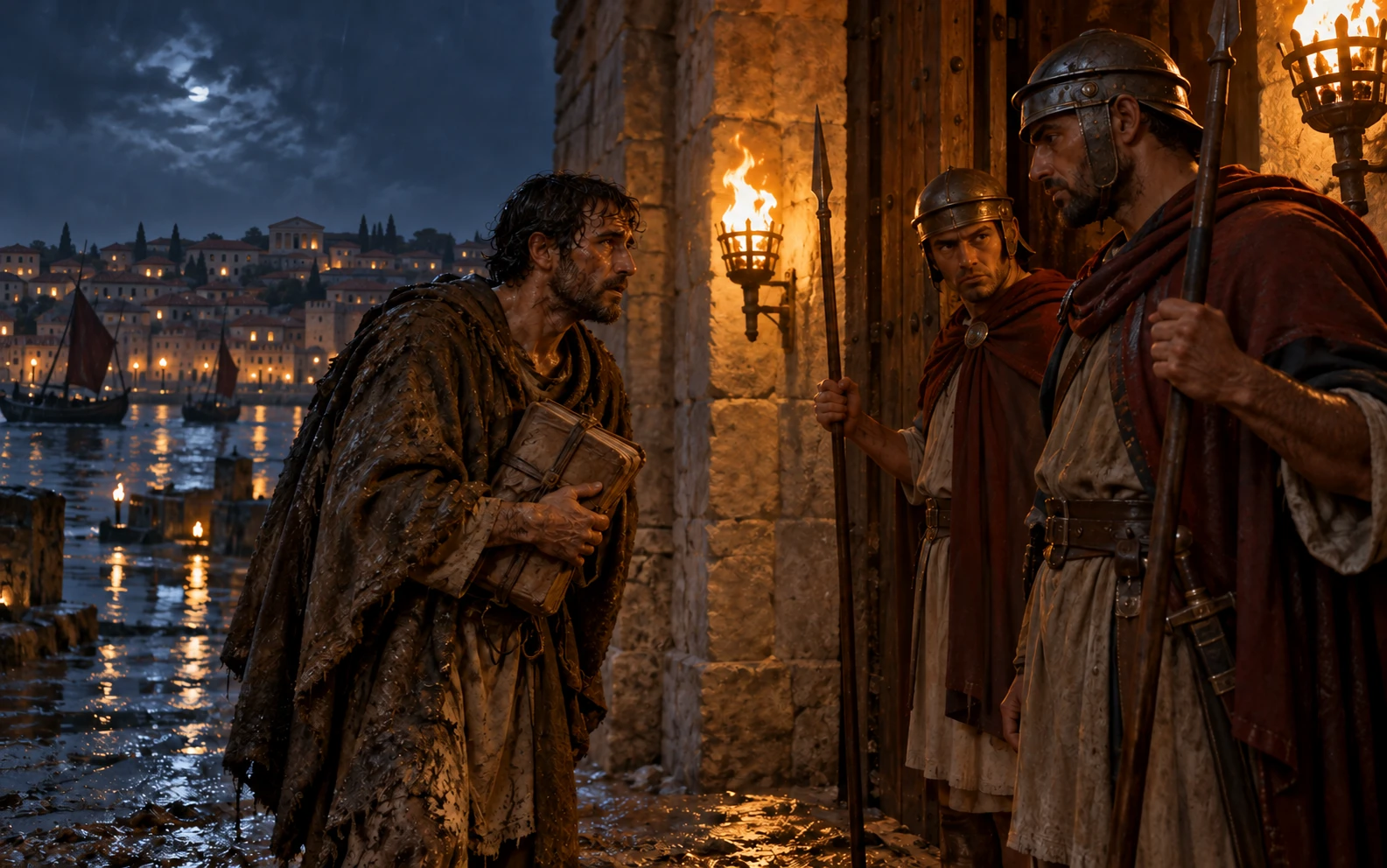
Byzantion · At the city gates
Mark’s account · 4th century
Soaked and filthy, but alive, I reached the gates of Byzantion. The suspicious guards at first would not let me in—my appearance was too wretched.
I collapsed to my knees. Trembling and sobbing, I could not force out a word.
Still, fortune favored me.
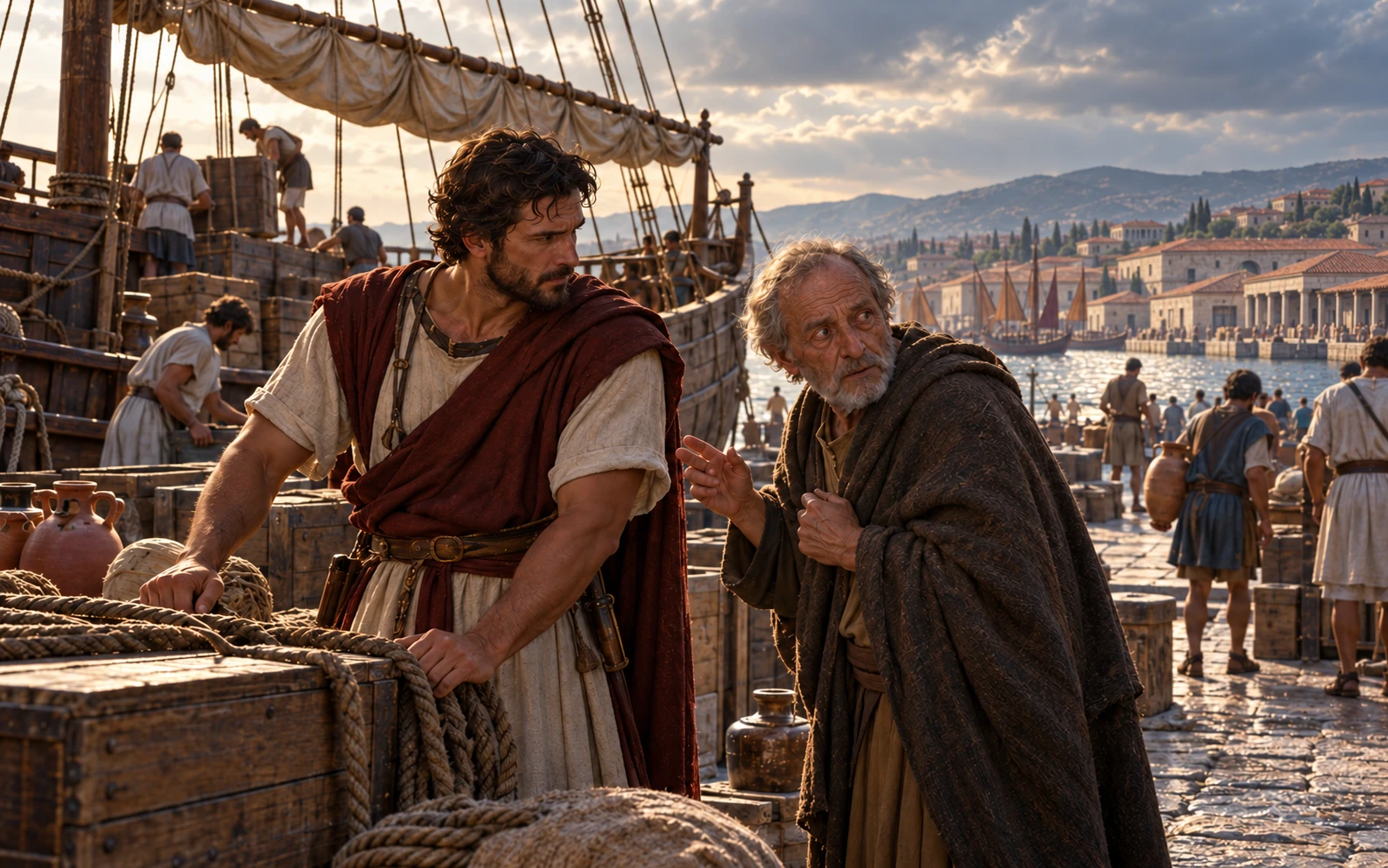
Thessaloniki · The Little Goat prepares to sail
Mark’s account · 4th century
I entered my thirtieth year as captain of the Little Goat, a merchant ship, in the port of Thessalonikeon, checking the progress of the loading before our morning departure for my native city.
Suddenly I heard a hail from the shore.
An old man, respectable yet somewhat sly in appearance, asked whether I was the ship’s captain. He fidgeted and glanced about nervously.
To tell the truth, I thought I was dealing with some criminal who wished to offer me a dubious bargain for stolen goods.
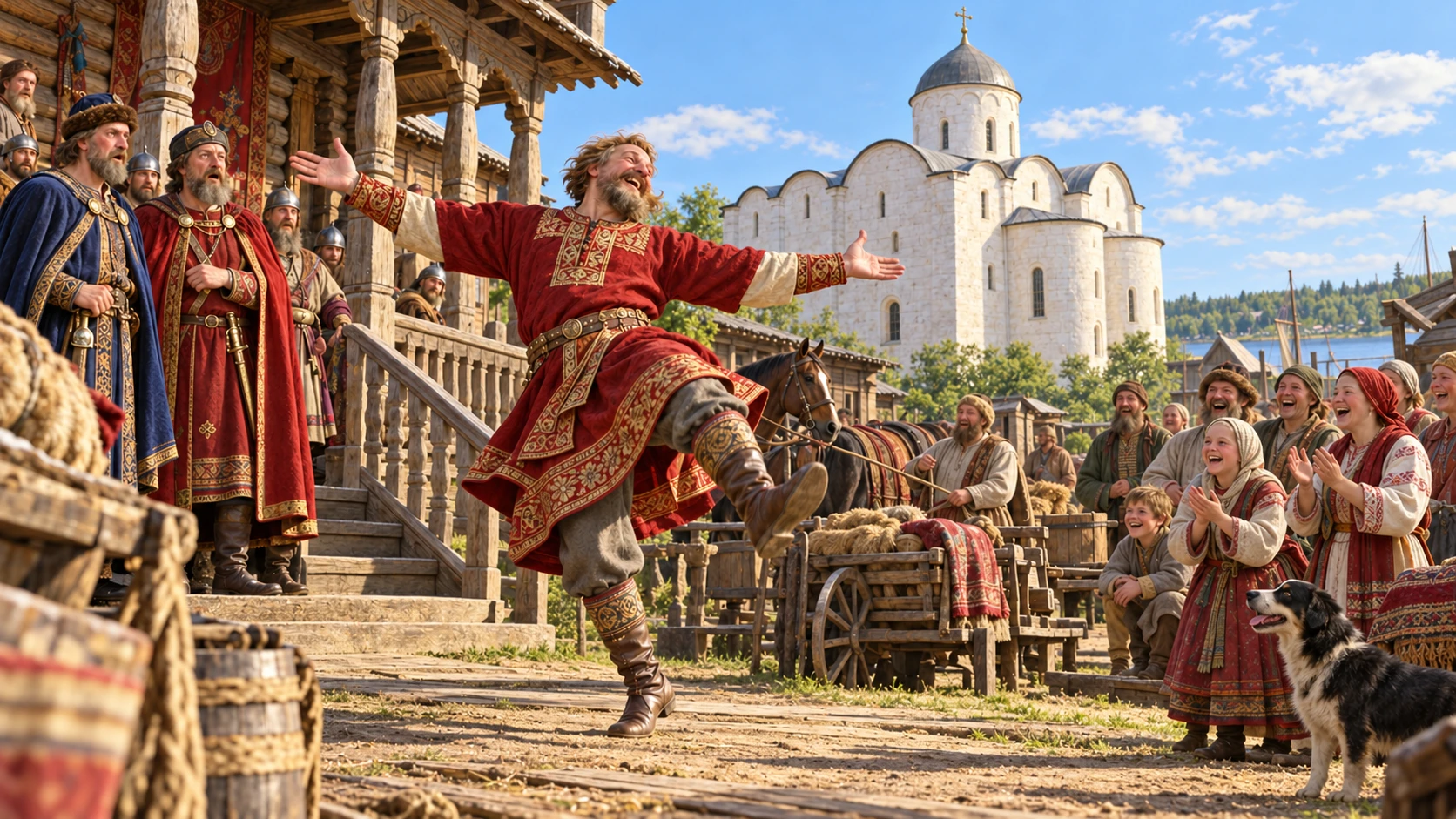
Novgorod · How to cheer up a posadnik
The characters’ journeys · 13th century
Feeling the jester in his soul, the ruler of Novgorod slapped his chest, then drummed his soles with his palms so furiously—hopping from foot to foot—as if he were stamping out hellfire itself.
He was pure folk frenzy—singing, whirling like a swan, with hops and squat-kicks—beaming at himself the whole time.
He stamped, flung his arms wide, bulged his eyes, lolled his tongue—fixing himself in city memory as the local holy fool.
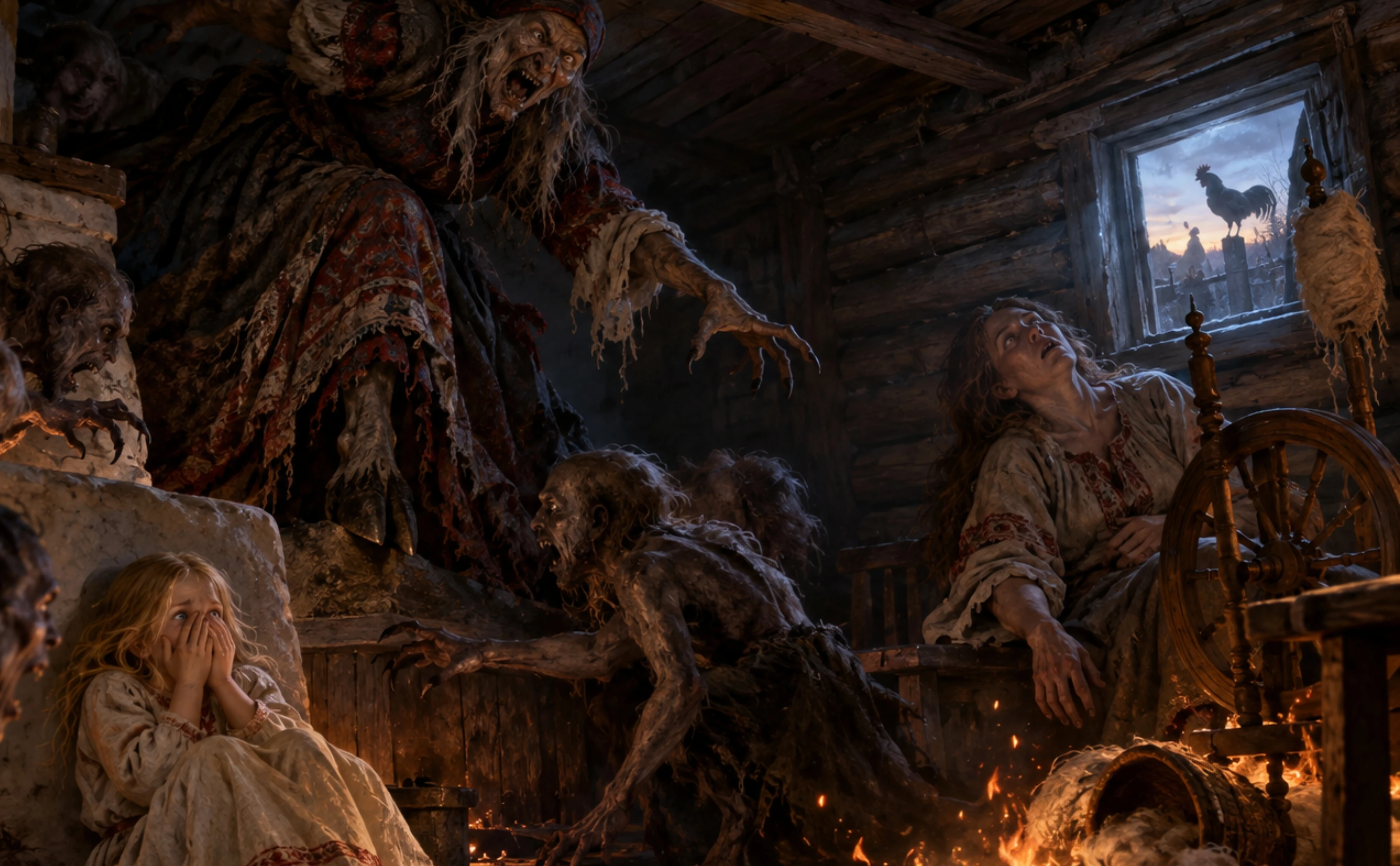
Luki · Christmas Eve
The characters’ journeys · 13th century
On Christmas Eve, Mother struggled to free Zorya—just back from caroling—from clothes crusted with ice. She hurried a handful of nuts and rusks into the girl’s rosy hands and sternly ordered her to crawl behind the masonry oven into her sleeping nook and not show her nose till morning. To every question she only waved a hand: “Curiosity killed the cat.”
The girl snorted and a mischievous smile spread across her face. She was forever giggling, and Mother was always telling her, “You’ll laugh yourself into trouble! You can’t grin at the whole world—sorrow will fly right into your mouth”
But the little lass would just wave it off and keep on smiling.
If you spin on the holy night, pray as loud as you might— If demons sing their carols near, In the dark you’ll disappear.
Sarai · Batu’s court · At Batu’s court
The characters’ journeys · 13th century
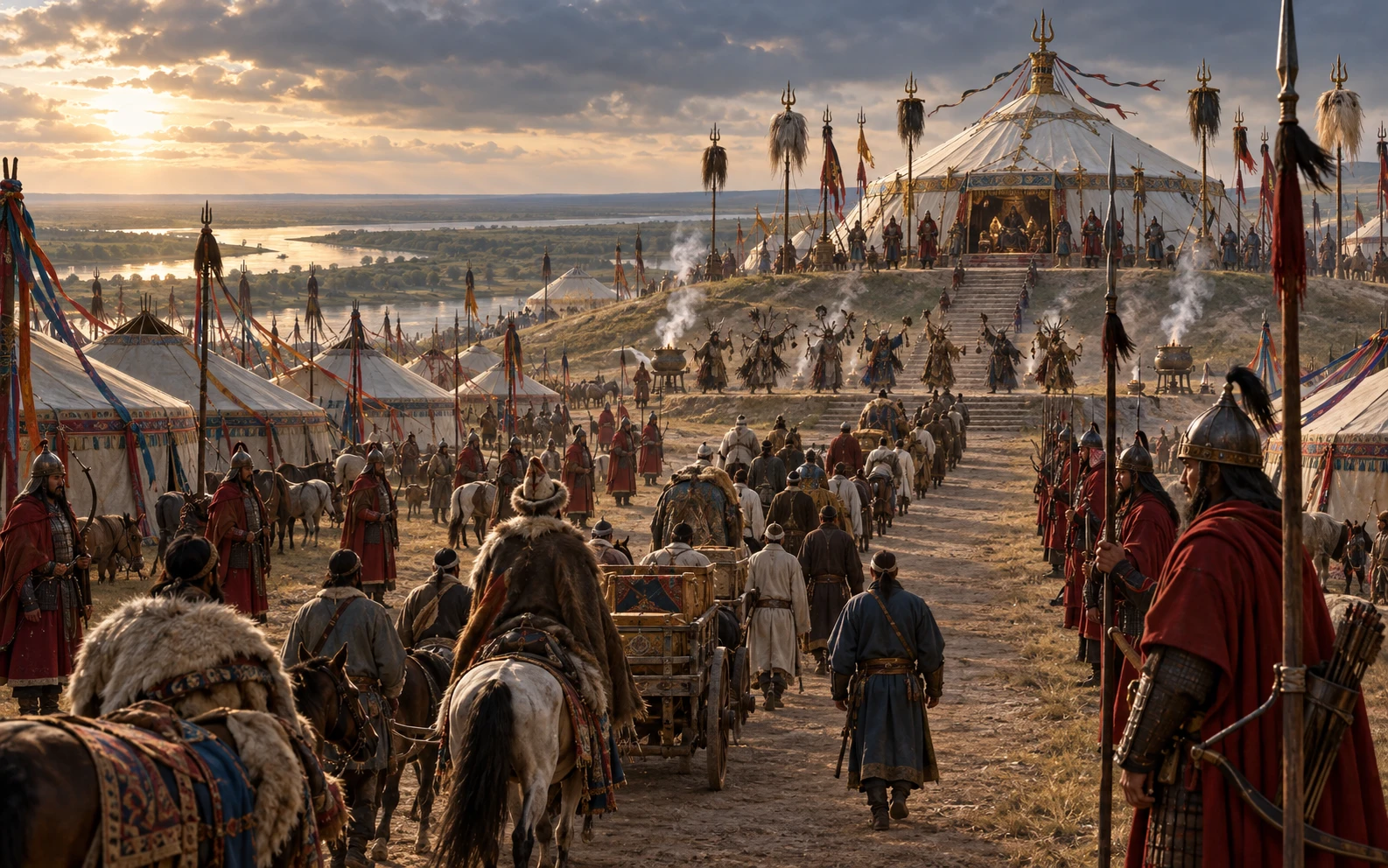
A line of tents, adorned with colorful ribbons, stretched along a wide road to a snow-white tent on a hill.
Along the way, mighty warriors in red cloaks, armed with spears and bows, glared sternly at the long procession of people who had come to bow before the grandson of the great Chinggis Khan.
At the foot of the hill, nine shamans, bells fastened to their robes, warded off evil spirits with their ritual motions.
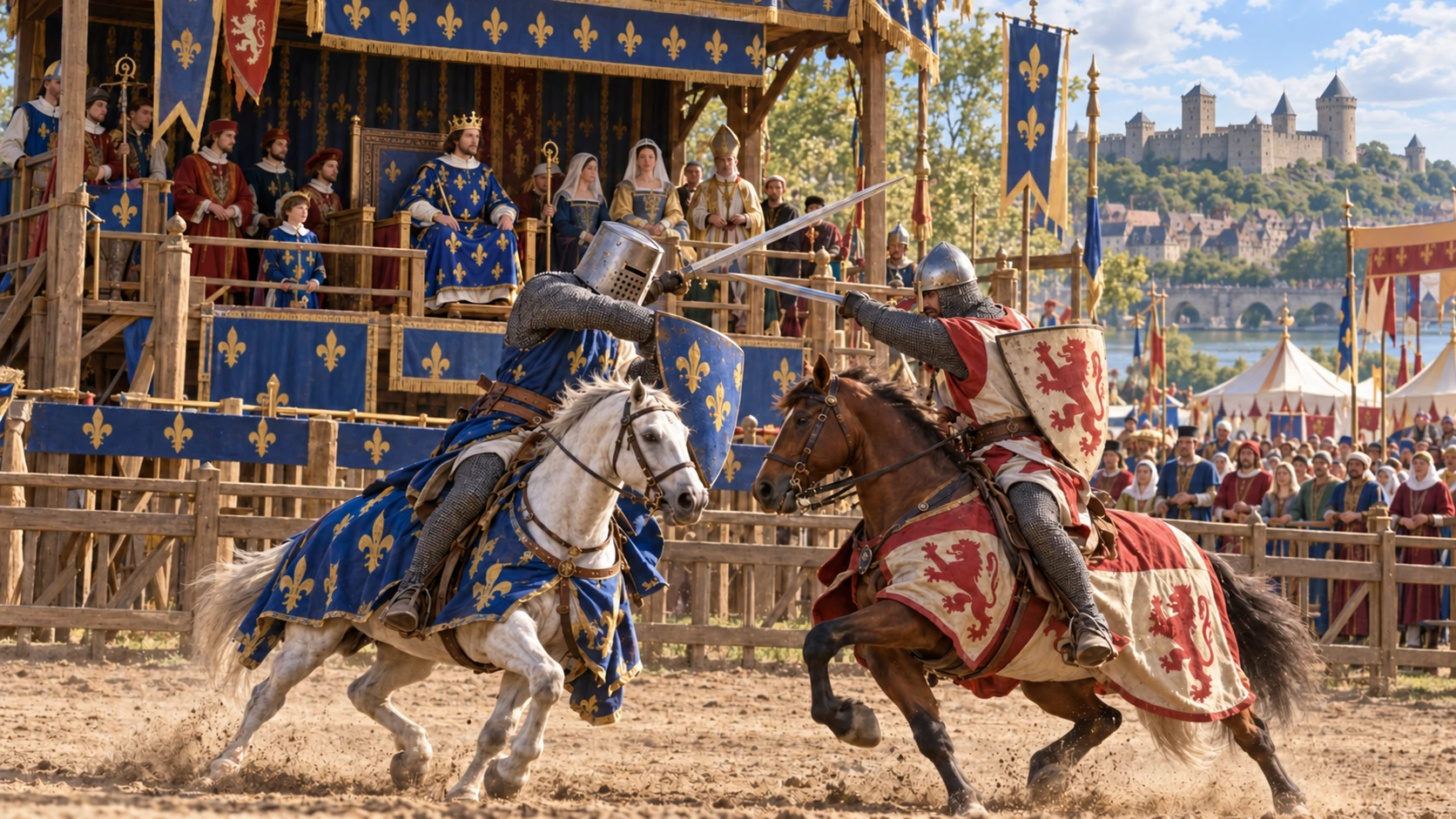
Blois · A tournament before the king
The characters’ journeys · 13th century
At last the signal was given.
Horses, held in till now, surged toward one another.
“The field is almost two thousand steps—room enough to work,” cried Thibaut of Navarre, the king’s young son-in-law, clapping with anticipation.
Riders yelled war cries and, at a full gallop, brandished swords, maces, and morning stars—tools for smashing, splitting, shattering: in short, for the efficient undoing of an enemy.
The crash of first contact.
The clash and ring of iron.
Rouen · A square waiting for fire
The characters’ journeys · 13th century
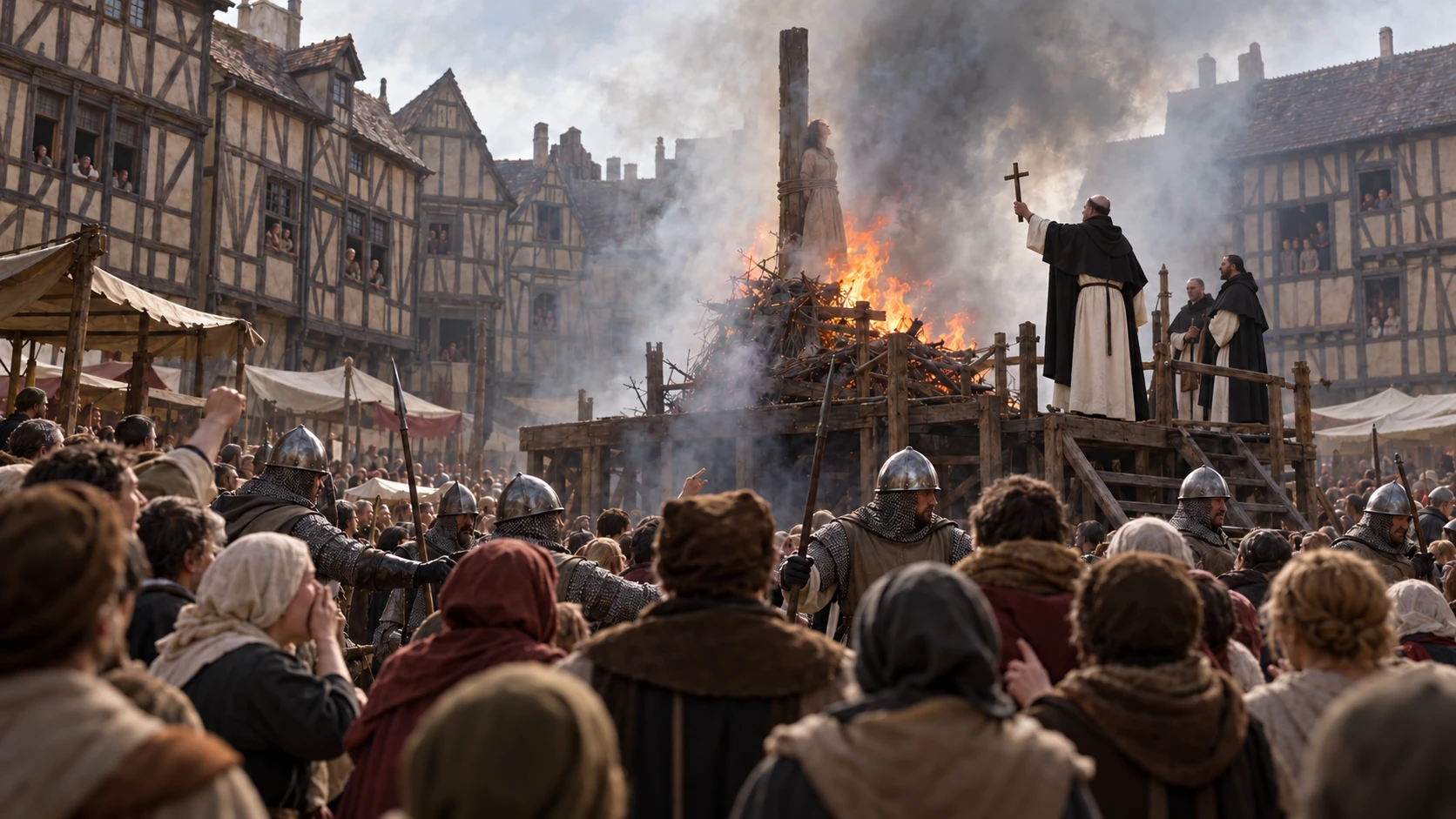
Above a timbered platform rose a roughly hewn stake. Servants bustled round it with bundles of brushwood. Bernard de Caux, a great cross in hand, waited impatiently for the procession and gave last orders to the five monks with him.
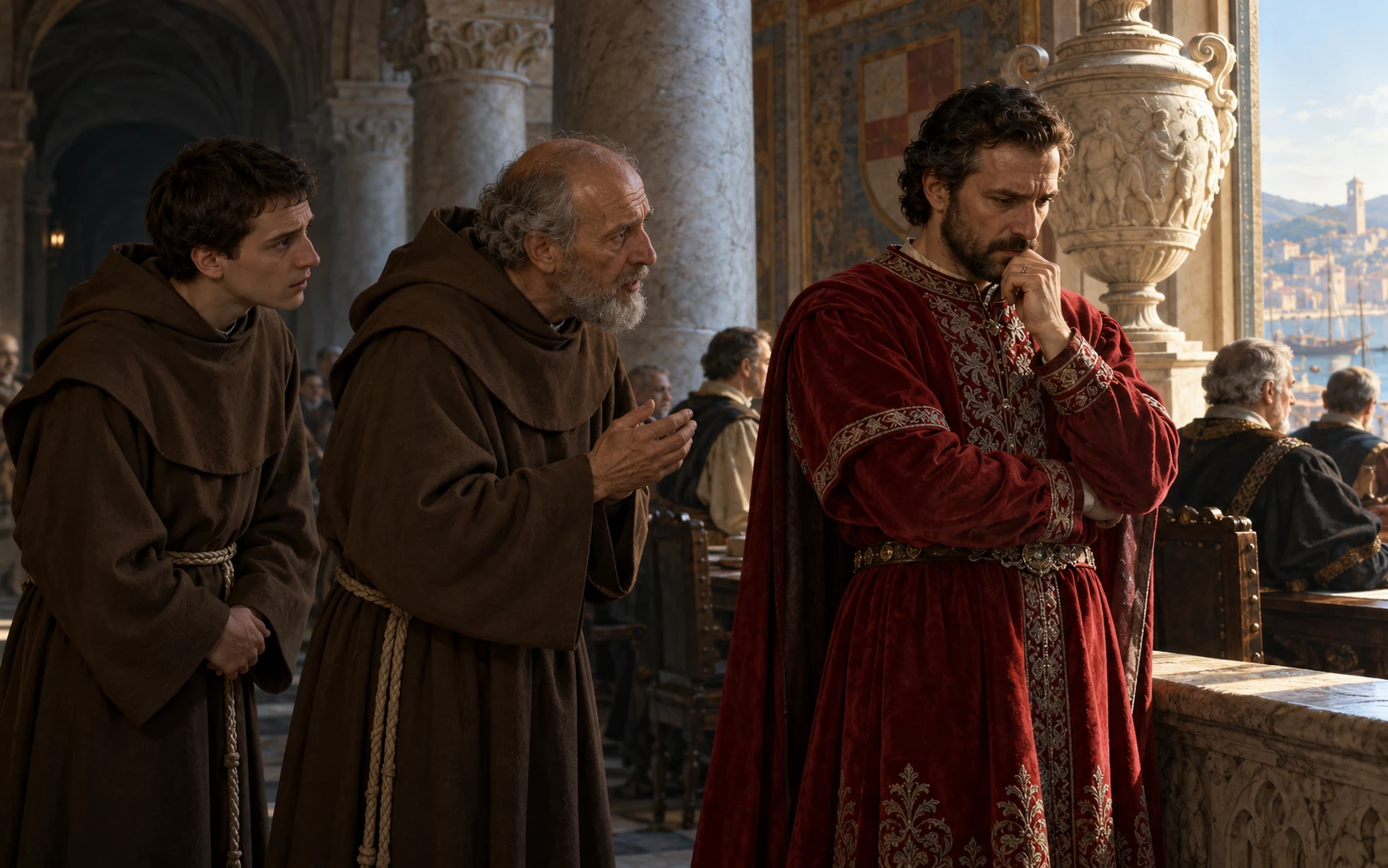
Savona · Grave news for Doria
The characters’ journeys · 13th century
“And how am I to help you?” Doria asked, striking a playful pose. “Till I saw you, I felt as sound as a bull—though now my legs seem to weaken.”
He laughed at his own jest. Brother Guillermo did not.
“I’m afraid the news is grave, Signor Doria.”
“Speak.”
Naples · A boat beneath the fortress
The characters’ journeys · 13th century
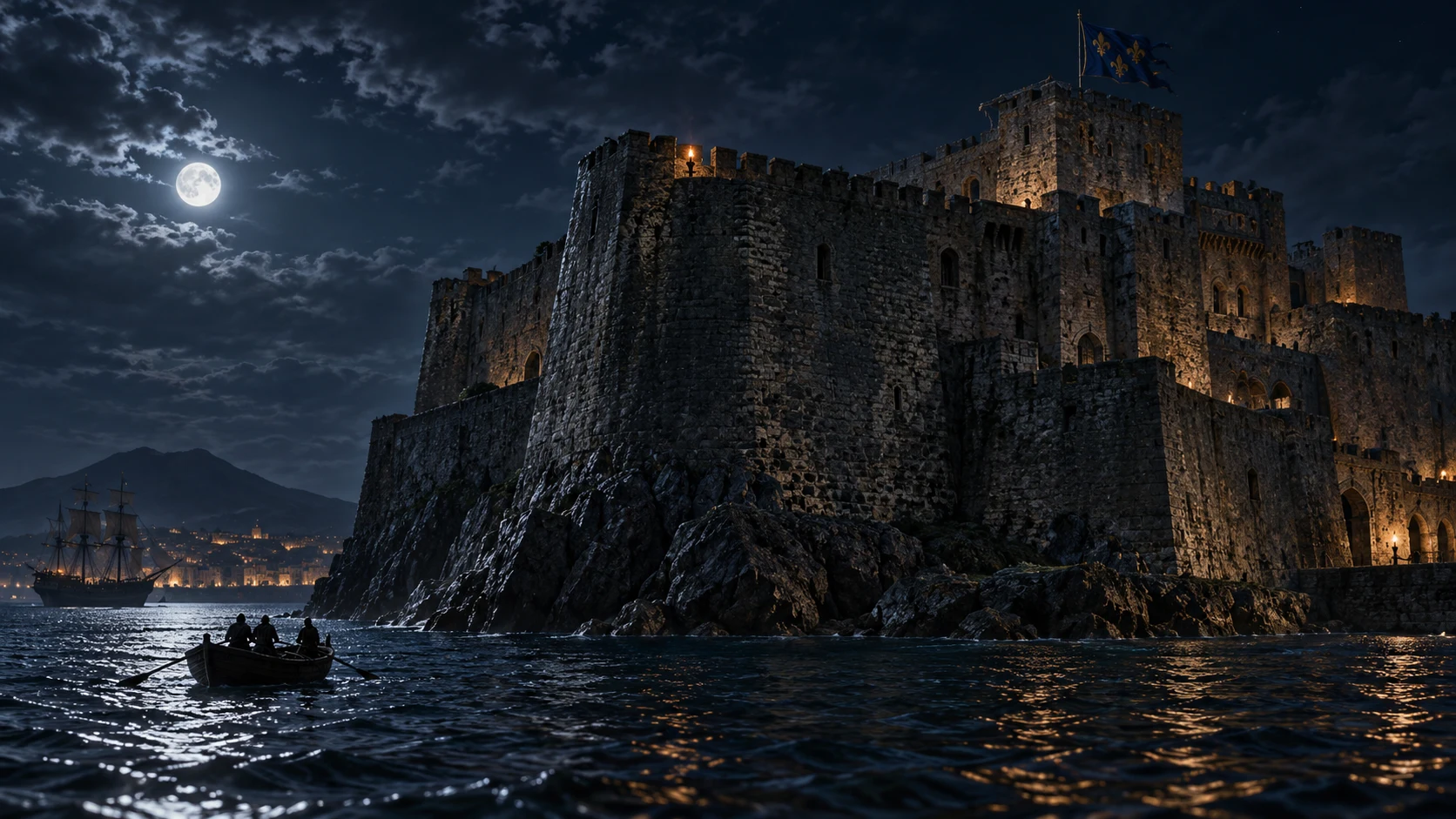
Exactly a month later, in midnight dark, a skiff cast off from a ship that had entered the bay and glided toward Castel dell’Ovo—Charles of Sicily’s residence in Naples—coming to rest on the swell beneath the looming walls.
The King of Sicily and Naples loved that grim stronghold, nicknamed “the Egg” by locals for its shape and rebuilt to meet seaborne attack. Its high sheer faces, its shadowed halls and secret passages, reminded the ruler of himself:
invincible, unbending, secretive.
Tunis · Carthage · Louis IX’s expedition
The characters’ journeys · 13th century
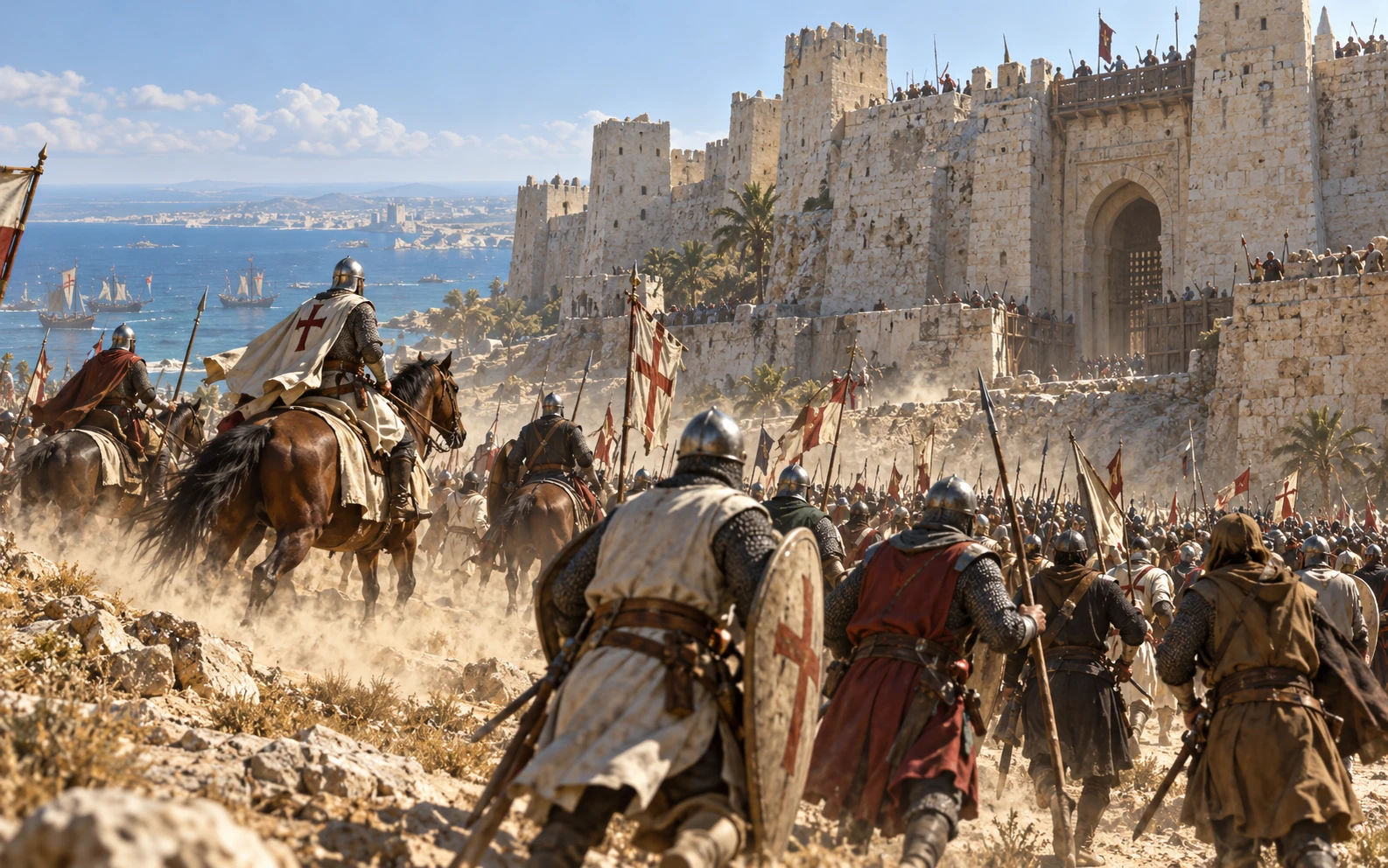
Trumpets sang, and a joyous cry flew along the strand: “Montjoie Saint-Denis!”
The king beckoned his younger brother, Alphonse of Poitiers, and the commander of the royal spearmen, Robert Malet de Graville.
“Gentlemen, no delay. Take your squadrons and storm that fortress of ancient Carthage. Surprise and shock will be your friends. The city holds the wells, without which this campaign will go hard for us. We will follow with the rest and make camp nearby.”
Mansura · The memory of an ambush
The characters’ journeys · 13th century
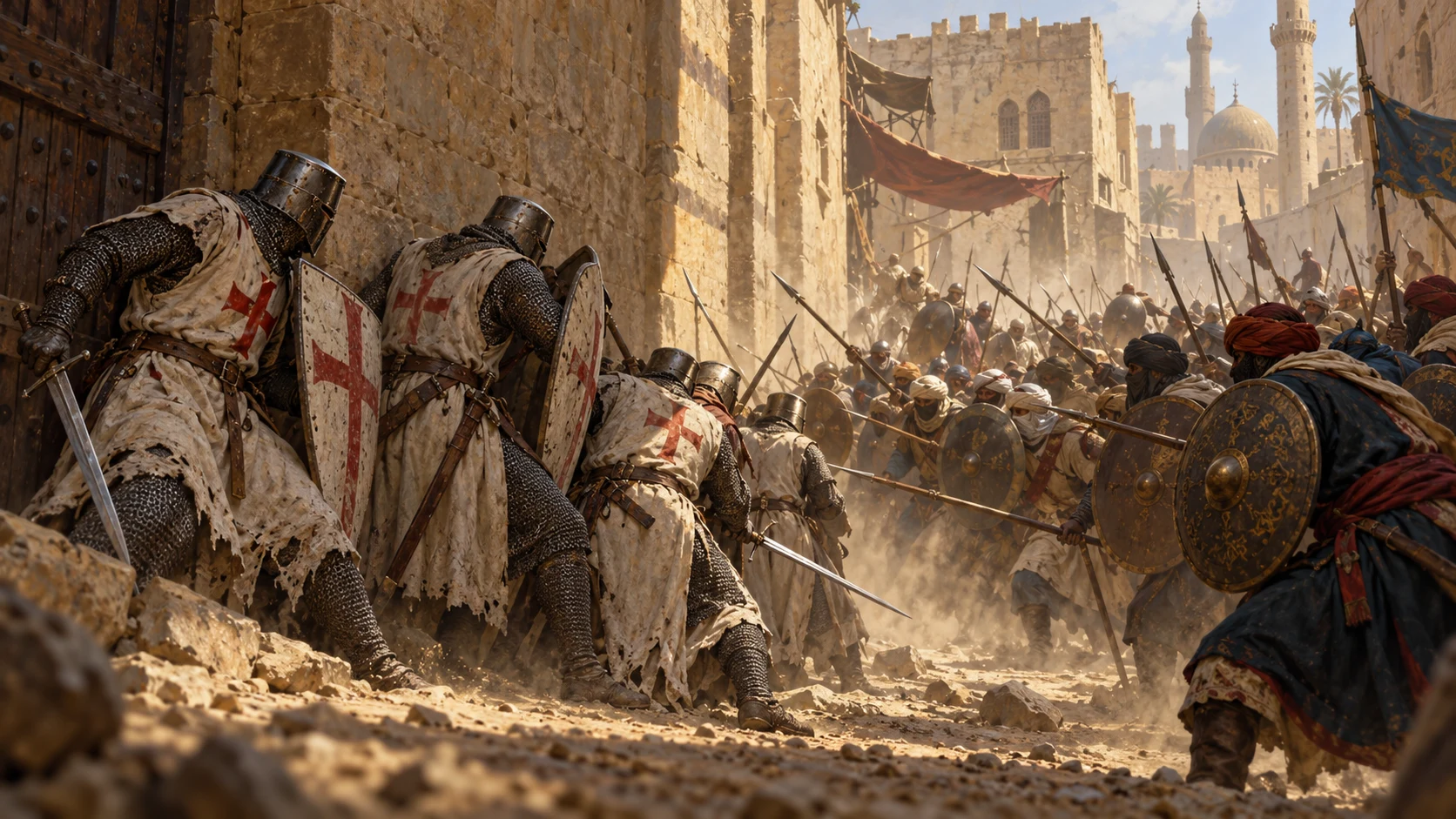
“Our men caught a Coptic Christian who swore there was an ambush in Mansurah. William Longespee, leader of the English Templars, the Grand Master Guillaume de Sonnac, and I went straight to the king’s brother.”
Hugues plucked a blade of grass, laid it on his calloused palm, and studied it while he gathered his thoughts.
“But Count d’Artois would hear none of it. He and the Englishman quarreled bitterly. Truth be told, there was talk they had already been at odds over spoil.”
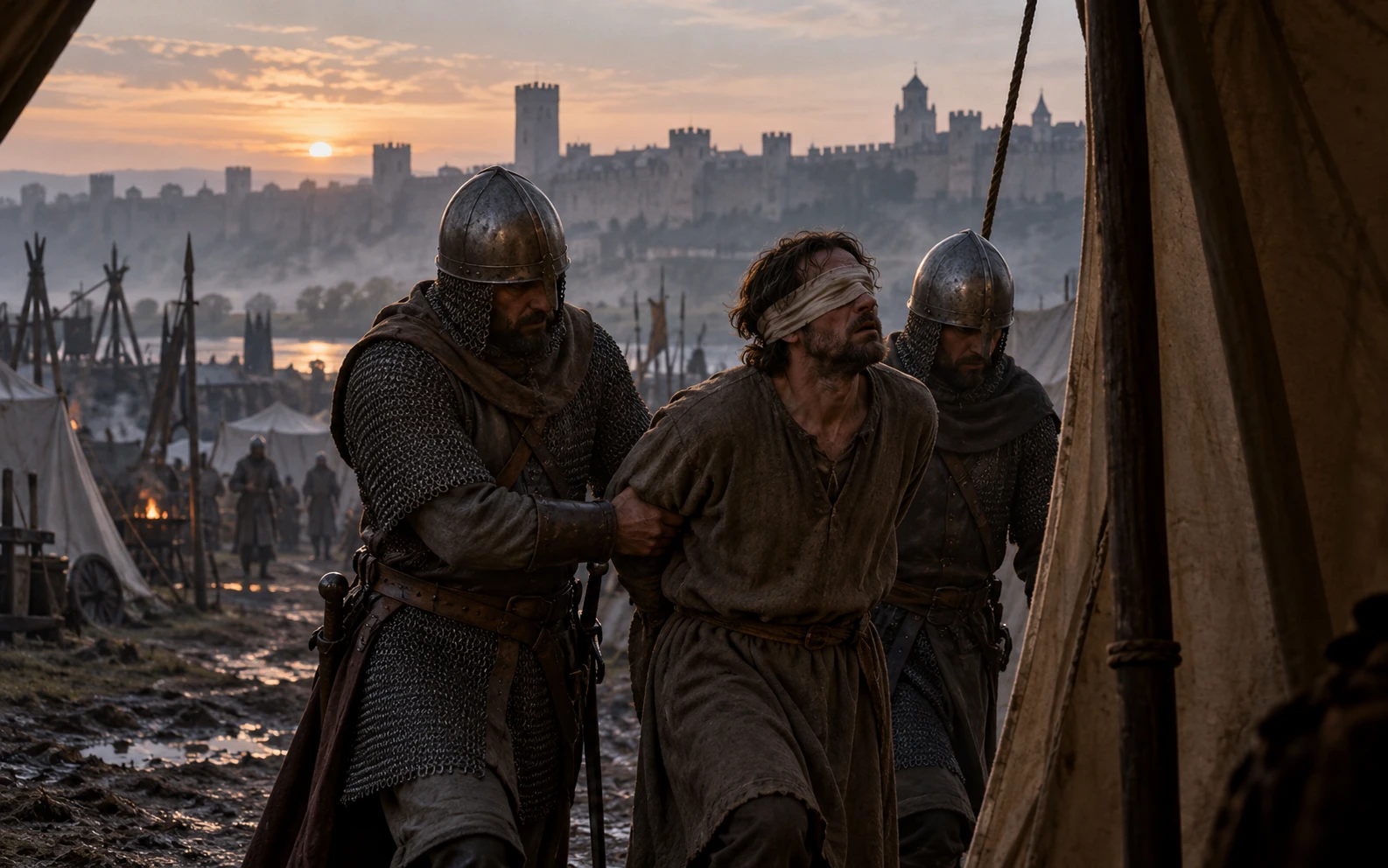
Avignon · A siege in Frisot’s account
The characters’ journeys · 13th century
“Perhaps. The Cathars did not rejoice for long. A few years later the French king’s troops entered the lands of Avignon—the last stronghold of our faith. I and two brothers of our community were taken prisoner. We prayed through the night, and at dawn they led me, blindfolded, to an empty tent nearby.”
Grodno · A road to conversation
The characters’ journeys · 13th century
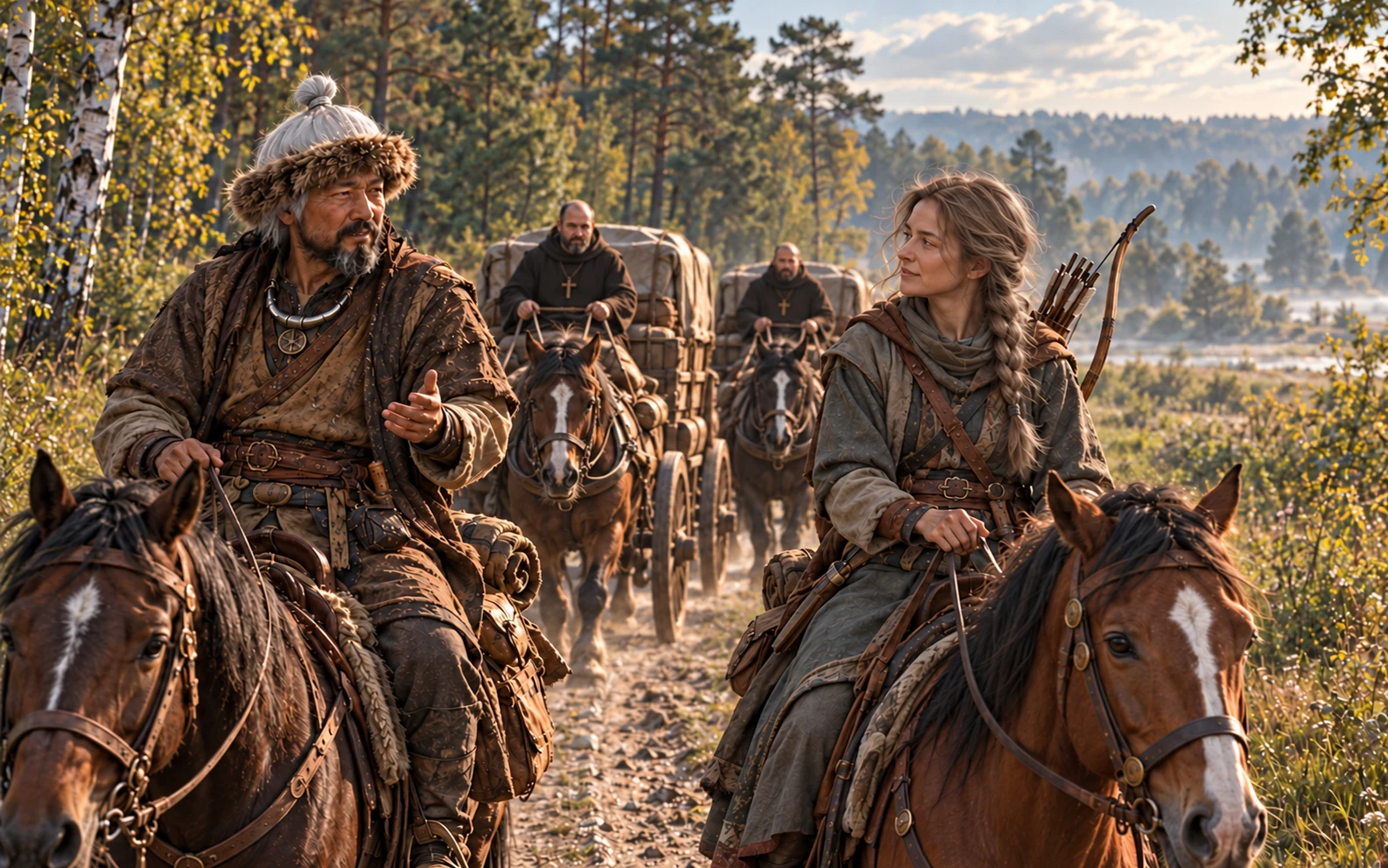
Slowly making their way toward Grodno with the caravan, Zorya and Chetger Yarig began to talk, cautiously at first, then more freely, discovering how much they shared.
He understood her love of nature and the creatures of the forest. Whenever, lovingly combing his horse’s mane, he spoke raptly of the fresh steppe wind kicking up high whitecaps on the Itil River where sturgeon played, or of the songs of countless cicadas that lulled travelers in the cool of night—she caught herself thinking that behind the arrogant gaze was a kind, perceptive man.
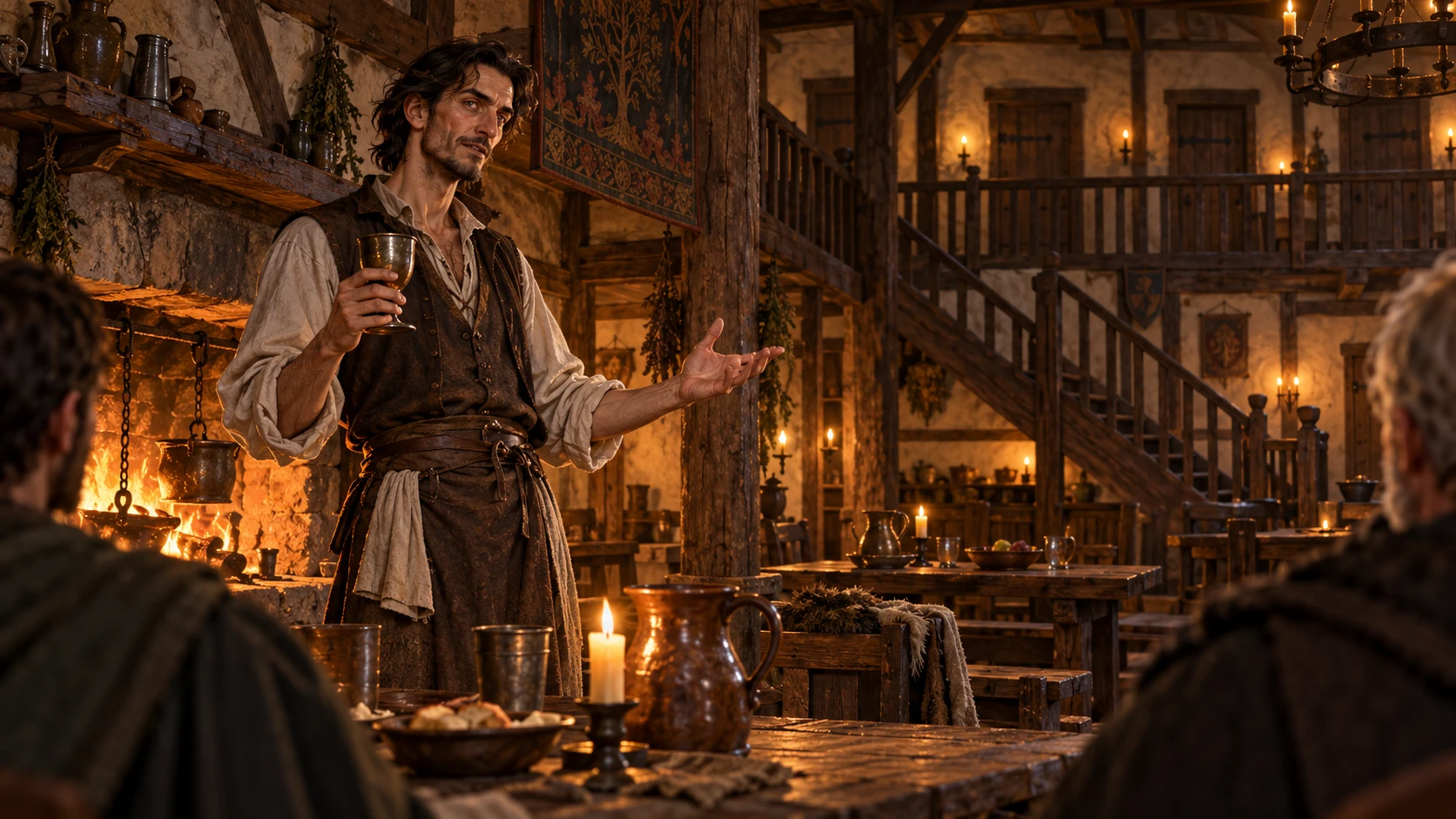
Châteaudun · Priva’s inn
The characters’ journeys · 13th century
“And tell me, good man,” Amaury interrupted, surveying the empty dining hall, “do you have many guests?”
“No, Your Grace. Three gentlemen just departed. Perhaps you met them on the road? Wearing funny green caps? No? Well, no matter—nothing remarkable about them. You have the place to yourselves! Take any table you like. I’ll just see to the meal.”
The innkeeper had not exaggerated. Soon he returned, balancing a mountain of dishes and jugs. He deftly laid out steaming slices of venison and poured, into wooden cups, what he swore was the best ale in the district.
Chetger Yarig inhaled deeply, savoring the smell of meat, and set to with enthusiasm, while the others questioned the host about any recent oddities.
De la Roche castle · The woman brought from the forest
The characters’ journeys · 13th century
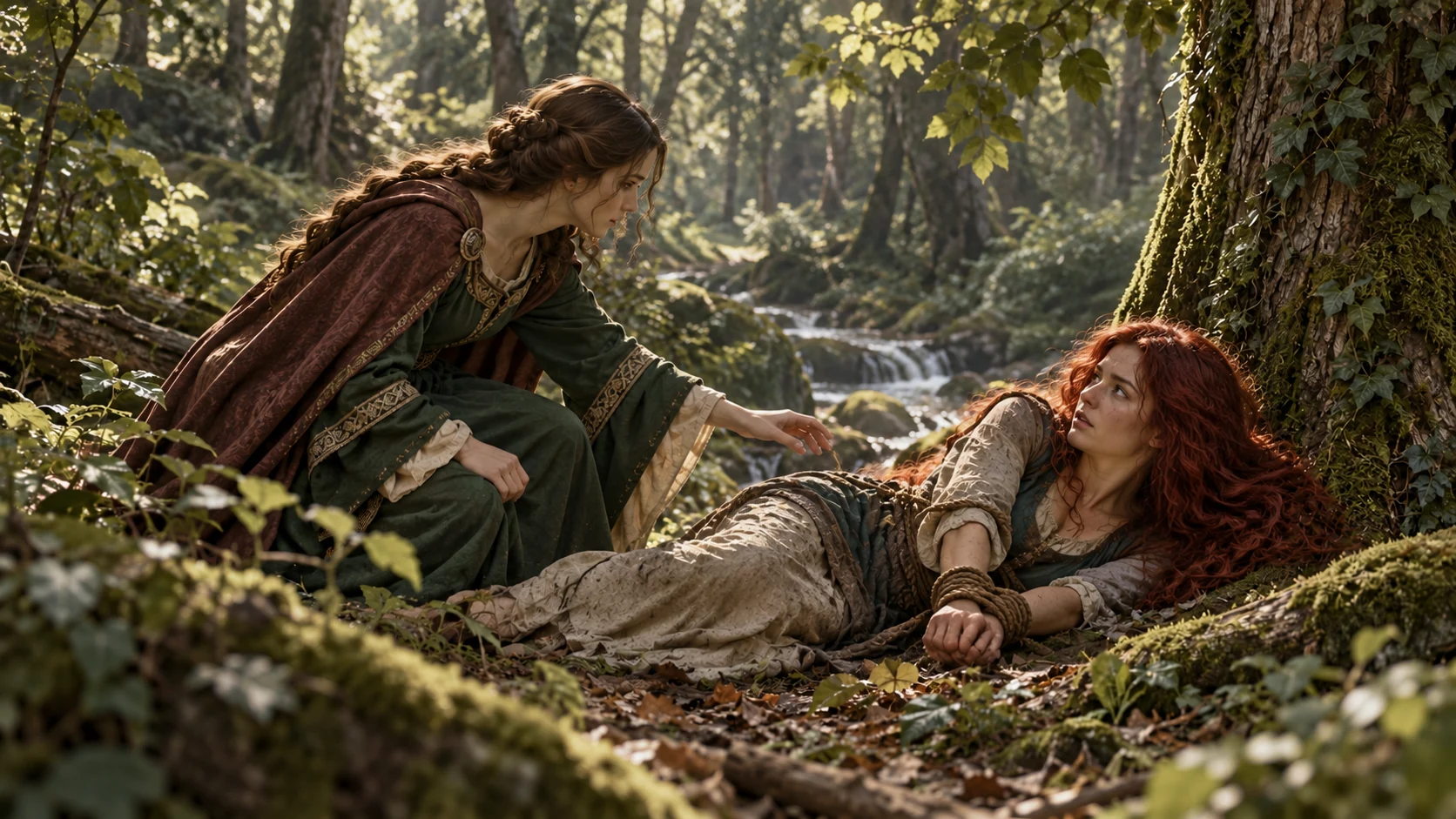
On the brook’s bank lay a bound woman; long red hair spread round her like a crumpled, thin coverlet.
A long track scored the damp earth: she had crawled far to escape her tormentors.
Agnes sprang from the saddle, scooped cold water in her palms, and bathed the woman’s face and neck.
The poor soul moaned and writhed, trying to crawl farther.
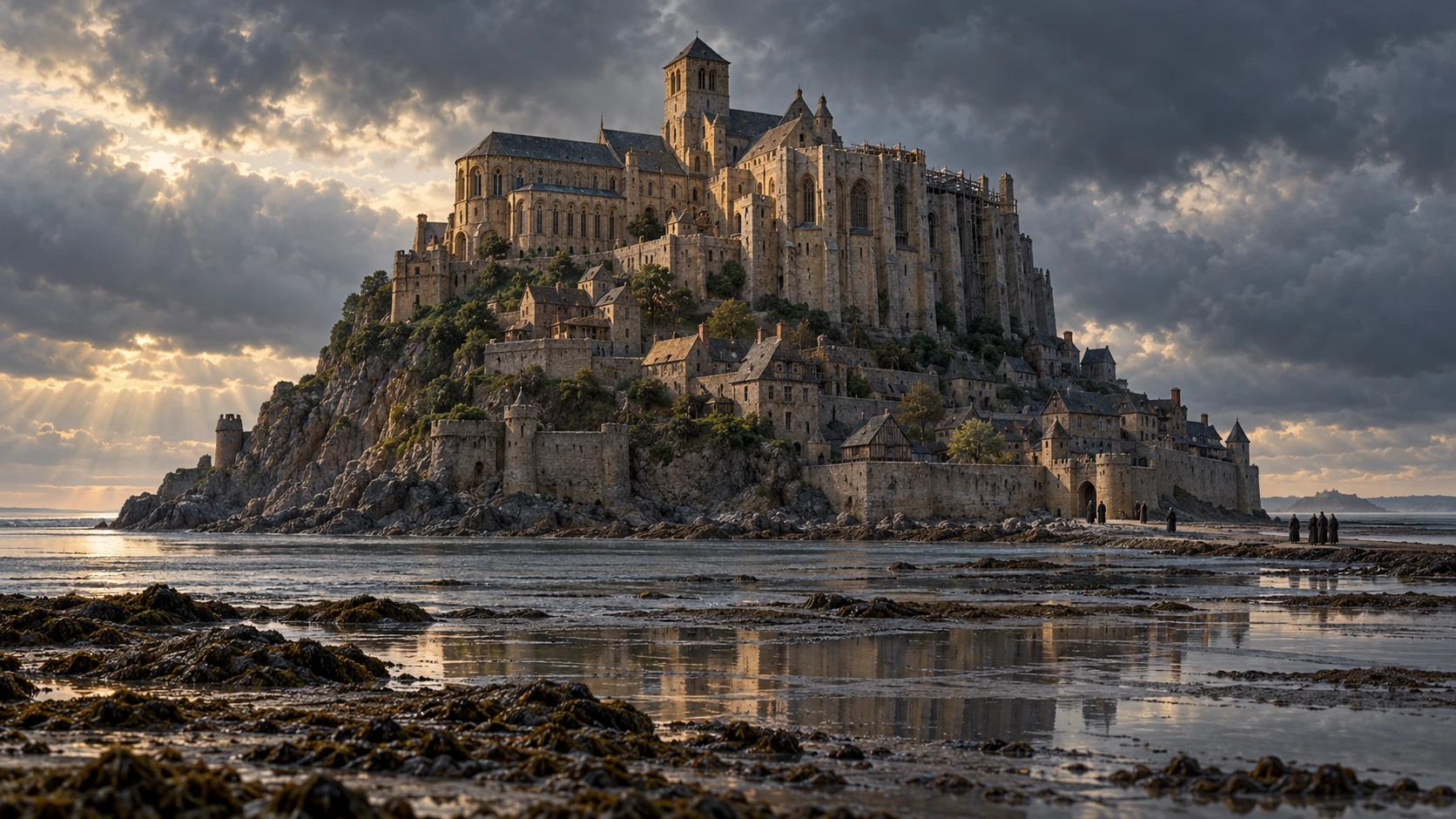
Mont-Saint-Michel · By the abbey walls
The characters’ journeys · 13th century
Two monks were dragging a balky donkey loaded with little casks.
Judging by the bees circling above them, they were coming back from the monastery meadow where they gathered the famed honey whose shortage Abbot Frisot had lamented in his letter. Now the stubborn animal flatly refused to leave the lush grass, and only brute force made it inch its way toward the abbey.
One monk was already drenched with sweat from trying to make the beast move to his will. The other, a novice by his age and habit, ran in circles and offered what he considered valuable advice.
“Brother Joseph, it seems to me you are not pulling this donkey, sent to test us, the right way,” the slender novice sang out yet again.
Devil’s Cliffs · A meeting at sunset
The characters’ journeys · 13th century
At last, through the curtain of rain, a small vessel appeared. Now soaring above the surging sea, now vanishing from sight, it drew steadily toward the shore.
Amaury picked his way down among the massive boulders to a narrow strip of beach, where, minutes later, a fishing boat shot out of the waves and buried itself deep in the dark sand.
Two shadows clambered out, gathered their few belongings, and headed toward the waiting knight.
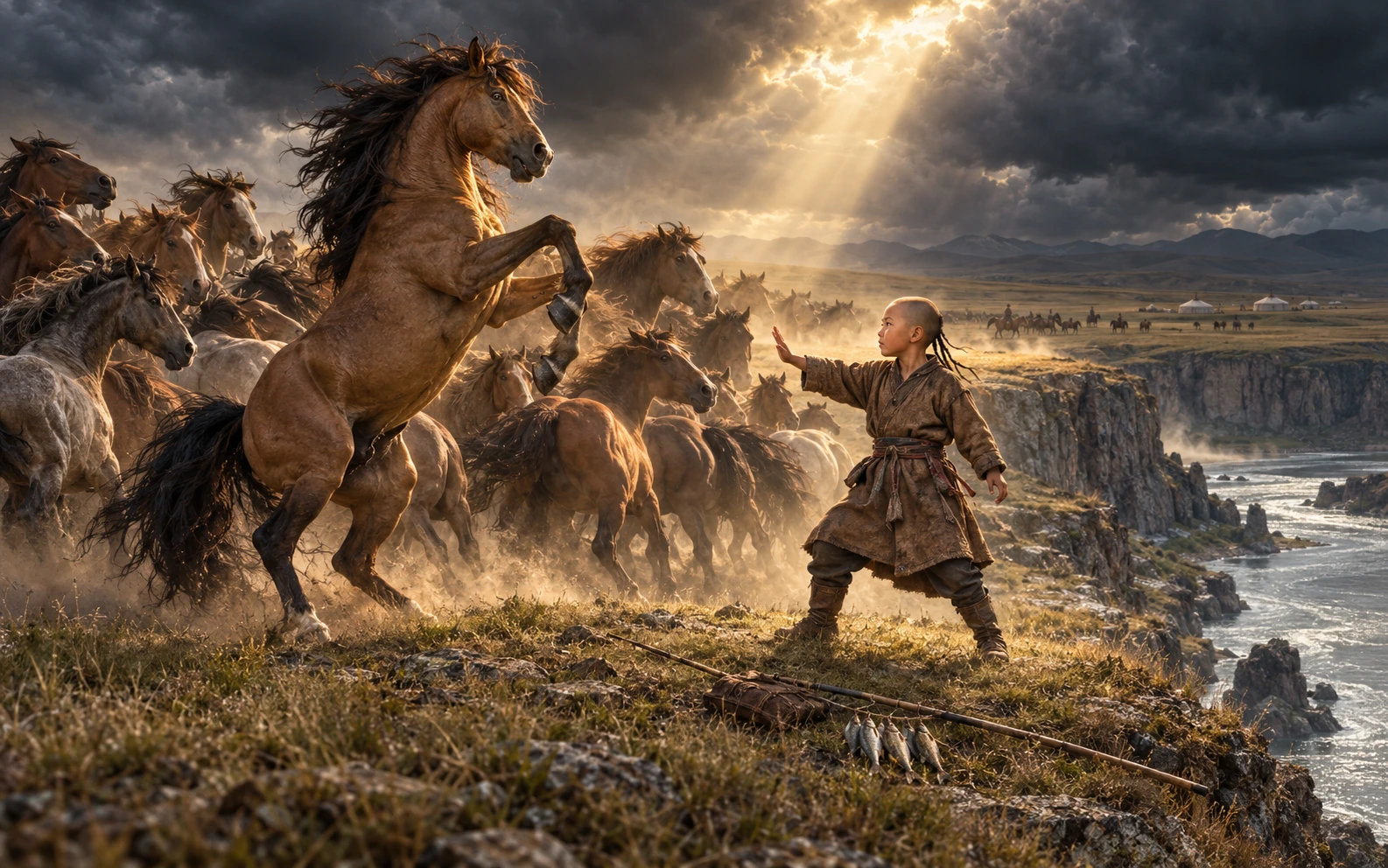
Toksoba lands · The boy who stopped the herd
Chetger Yarig’s childhood
In hushed stupor people watched the wild, unbridled power roar down on the boy, trailing a cloud of steppe dust.
There rose a common cry—or was it a sob?—and the women covered their faces in horror. The boy spun at the drum of hooves and, holding his left palm up, shouted at the onrushing horses:
“Stop, you there!”
A slender sun ray tore the unbroken cloud, and the child shone with glittering gold. Darkness drew back, and the light wrenched the crazed herd from half-gloom. Blinded by the sudden blaze—or stunned by so frail an obstacle as a human child—the great dun stallion screamed and reared. Then he shook his mane and turned the herd away from the brink.
NORMANDY · NOVGOROD · THE GOLDEN HORDE · BYZANTIUM
Mercy has
dangerous consequences.
In Normandy, fear speaks through judgment and accusation. In Novgorod, forest signs and folk magic have their own language. In the steppe, song carries memory and shamanic power demands a price. The journey also reaches the lightless catacombs of Byzantium. These strands meet around people choosing between imposed duty and conscience.
An artistic interpretation based on the manuscript
An encounter in the forest
Agnes finds a bound woman and chooses to help. Melanie enters her life as a rescued captive. The question of whom to trust will remain long after the encounter.
CHARACTERS
People without an easy choice
Agnes de la Roche
Mercy as an action
She could have ridden past. Choosing to save a stranger makes her part of events for which nobody prepared her.
Amaury de la Roche
A duty he must choose
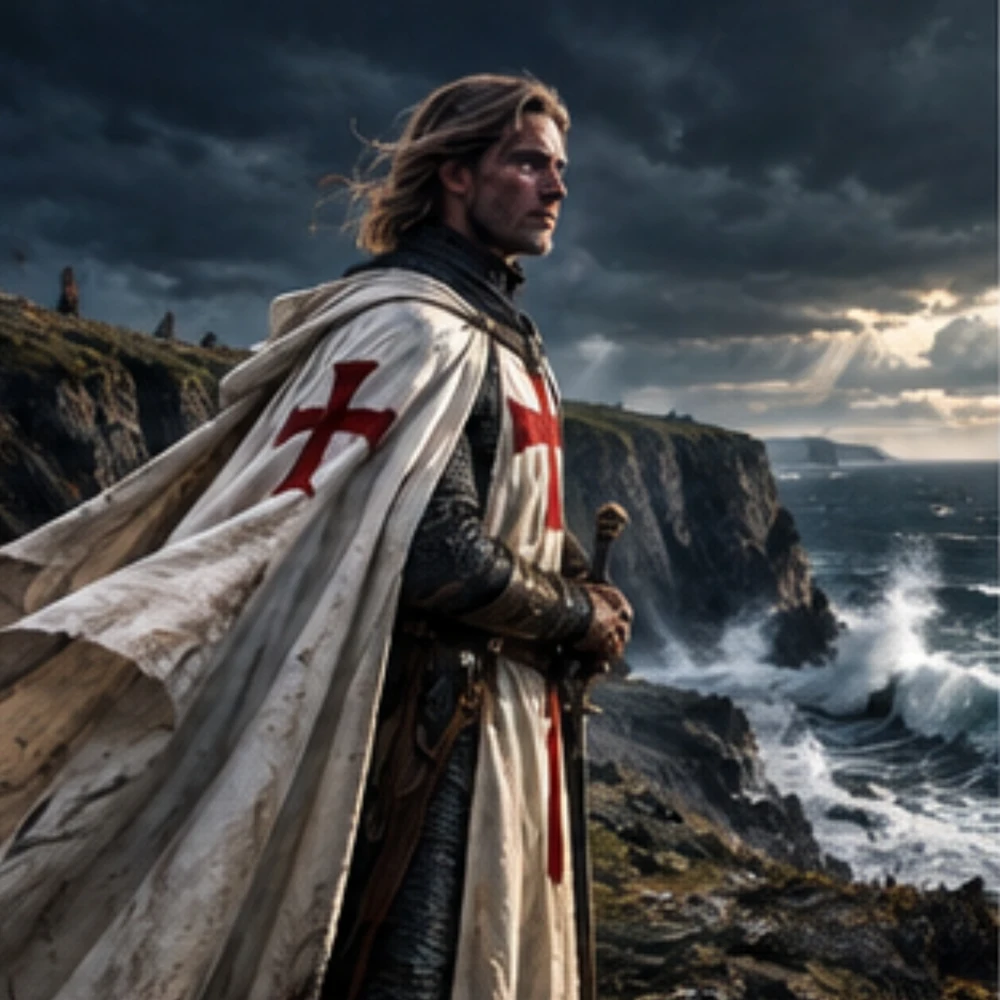
A Templar and Agnes’s brother. His order cannot spare him the responsibility of deciding whom to protect and what to believe.
Melanie d’Eville
Power does not establish guilt
A rescued captive, accused of witchcraft. Choosing a convenient label—victim or threat—cannot explain her.
Chetger Yarig
Memory carried in song
A Mongol shaman and tamer of demons. Behind his power lie memory, obligation, and a cost paid through the body.
Lucy / Zoryanka
Reading signs
An archer and survivor from Novgorod. She reads the forest, solves riddles, and acts while others are still trying to understand.
THE FACE OF THE THREAT
Bernard de Caux
The inquisitor’s certainty makes him dangerous. Doubt can become confession in his hands; an event can become proof of an accusation. A thin, almost eagle-like face and clean black-and-white clothes carry a threat that needs no monstrous features.
An artistic interpretation based on the manuscriptFor a closer reading
- When does defending faith become defending one’s own certainty?
- Can you protect someone you do not trust?
- How do duties to an order, a family, and conscience differ?
Read the first chapters
Where do you draw the line between faith and fear?
Where shall we begin?

D’ohm the Gnome
The clumsiest gnome in fantasy just broke the magic clock. FLY you, fools!
Discover the book ↗The Songs of Adhartach
NORMANDY, 1256. A BOY'S MUTILATED BODY IS FOUND IN THE WOODS NEAR A BENEDICTINE ABBEY.
Discover the book ↗
The Krasinski Collapse
Senator Matthew Krasinski built his life on despising the weak and shutting out outsiders. He was the face of power and success.
Discover the book ↗About this book
NORMANDY, 1256. A BOY'S MUTILATED BODY IS FOUND IN THE WOODS NEAR A BENEDICTINE ABBEY.
- Genre
- Dark historical fantasy / occult thriller
- Setting
- Normandy, Rus’, the Golden Horde and the Mediterranean
- Period
- 4th century; 13th century; a modern storyline
- Language
- English
- ASIN
- B0FY1ZGPZN
- Content note
- Graphic violence; non-linear structure; several timelines.
Updated: